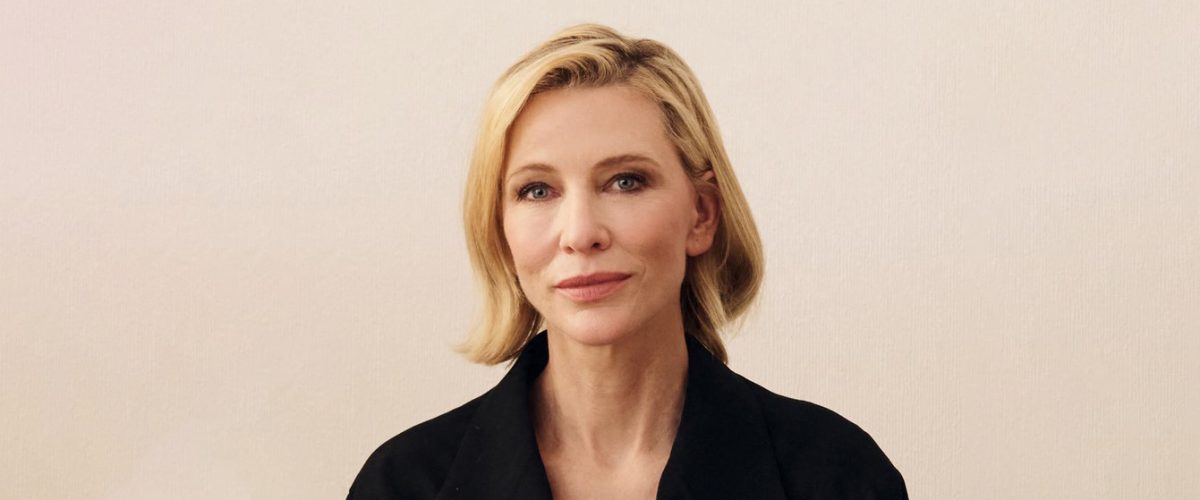
Cate Blanchett has signed an open letter in defense of Berlinale director Tricia Tuttle and of the Berlinale as “a place of exchange”. You can read more about the controversies that the recent edition of the festival faced here.
On other news, Dirty Films has signed a first-look film and television deal with Searchlight Pictures.
Open Letter on the Future of the Berlinale
In the wake of public criticism surrounding statements made during the Berlinale awards ceremony, as well as a widely discussed photograph of the festival leadership, an extraordinary meeting is set to deliberate on the future of Festival Director Tricia Tuttle and the festival’s future direction. Filmmakers and industry representatives view this as more than a personnel matter: in their view, the institutional independence of the Berlinale as a whole is at stake.
Against this backdrop, Tara Afsah (Komplizen Film), Raquel Kishori Dukpa, Paulina Lorenz and Faraz Shariat (Jünglinge Film), Jorgo Narjes (X Filme), Maryam Zaree (director and actress), Dieu Hao Do (filmmaker), and Jakob Kijas (eksystent Filmverleih) initiated an open letter defending the Berlinale as a space for free discourse and its institutional independence. Within just a few hours, nearly 700 signatories from the film and cultural sectors joined the appeal.
Tilda Swinton, Todd Haynes, Sean Baker, Eva Trobisch, Melika Foroutan, Caroline Link, Devrim Lingnau Islamoglu, Ilker Çatak, Nadav Lapid, Nicolette Krebitz, Janine Jackowski, Jella Haase, Maximilian Mundt, Pegah Ferydoni, Aaron Altaras, Shahrbanoo Sadat, Emilia Schüle, Maren Ade, Ari Folman and Tom Tykwer are among the signatories.
As filmmakers in Germany and beyond, we are following the current debates surrounding the Berlinale and the proposed dismissal of Tricia Tuttle with deep concern. We stand in defense of the Berlinale for what it fundamentally is: a place of exchange.
The Berlinale is more than a red carpet or a series of headlines. It is a space where perspectives intersect, narratives are questioned, and social tensions are brought into view. This is where discourse unfolds – at the very heart of cinema.
Recent criticism has focused on statements made from the stage. None of these remarks were made by the festival leadership itself, but by invited filmmakers. An international film festival is not a diplomatic instrument; it is a democratic cultural space worthy of protection. Its strength lies in its ability to hold divergent perspectives and to give visibility to a plurality of voices.
A photograph of the festival leadership with filmmakers, in which a Palestinian flag was visible, has likewise been subject to criticism. Being photographed with international guests is part of the practice of such a festival. The visibility of different identities is not an endorsement; it is an expression of an open and democratic public sphere.
When personnel consequences are drawn from individual statements or symbolic interpretations, a troubling signal is sent: cultural institutions come under political pressure.
If an extraordinary meeting is convened to decide the future of the festival’s leadership, more is at stake than a single appointment. What is at issue is the relationship between artistic freedom and institutional independence.
The Berlinale has always been political — not party-political, but socially engaged. Film makes conflicts visible, opens up perspectives, and renders experiences of injustice and violence tangible. Cinema raises moral questions and asks us to endure ambiguity rather than resolve it prematurely. It illuminates power structures and gives visibility to experiences of oppression — not to deliver simple answers, but to enable meaningful public debate. That is precisely where its democratic value resides.
Especially in times of global crises, we need spaces capable of sustaining disagreement. The independence of cultural institutions safeguards not only artistic freedom, but the vitality of democratic discourse itself.
If every controversy leads to institutional repercussions, discourse gives way to control.
We stand for a culture of exchange, not intimidation.
Where diversity remains visible, democracy remains alive.
Full list of signatories here.
Dirty Films x Searchlight Pictures
Dirty Films, the production company of Cate Blanchett, Andrew Upton and Coco Francini, has signed a first-look film and television deal with Searchlight Pictures.
Under the deal, Searchlight will develop and produce features with the production company, as well as series for streaming under Searchlight Television. The partnership follows Searchlight’s work with Dirty Films on Sweetsick, a new drama led by Blanchett which marks the directorial debut of Alice Birch. Notably, it also marks a full-circle moment for Blanchett, whose international feature debut, the Bruce Beresford-helmed Paradise Road, was distributed by the studio.
“Dirty Films has consistently championed distinctive voices and ambitious storytelling,” said Searchlight President Matthew Greenfield. “Cate, Andrew and Coco are singular creative partners and we’re thrilled to continue our commitment to filmmaker-driven cinema with this collaboration.”
The Dirty Films principals added, “We are honored to partner with Searchlight Pictures, whose passion for cinema and deeply collaborative ethos align seamlessly with our own. Together with Matthew Greenfield and his exceptional team, we look forward to championing bold, entertaining, and provocative storytelling across film and television for audiences worldwide.”
Previously working on films like James Vanderbilt’s Truth and Todd Haynes’ Carol, both starring Blanchett, Dirty Films has also produced the Oscar winner’s series Mrs. America and Stateless for FX and Netflix, respectively. In addition to Sweetsick, they recently wrapped on Jenny Suen’s Peaches and the Zellner Brothers’ Alpha Gang. Other recent credits include Warwick Thornton’s The New Boy, Christos Nikou’s Fingernails, Noora Niasari’s Shayda, as well as the award-winning podcast Climate of Change and the VR interactive experience Evolver.
Alongside USC Annenberg Inclusion Initiative, Dirty Films spearheads the Proof of Concept Accelerator Program supporting women, trans and non-binary filmmakers. Blanchett also leads the Displacement Film Fund empowering refugee and displaced filmmakers.
Source: Deadline



 A Manual for Cleaning Women (202?)
 Electra/Persona (2026)
 Sweetsick (202?)
 Father Mother Brother Sister (2025)
  Black Bag (2025)
  The Seagull (2025)
 Bozo Over Roses (2025)
 Disclaimer (2024)
  Rumours (2024)
  Borderlands (2024)
  The New Boy (2023)


